Infrastructure Report 2026: The Backbone of Romanian Logistics
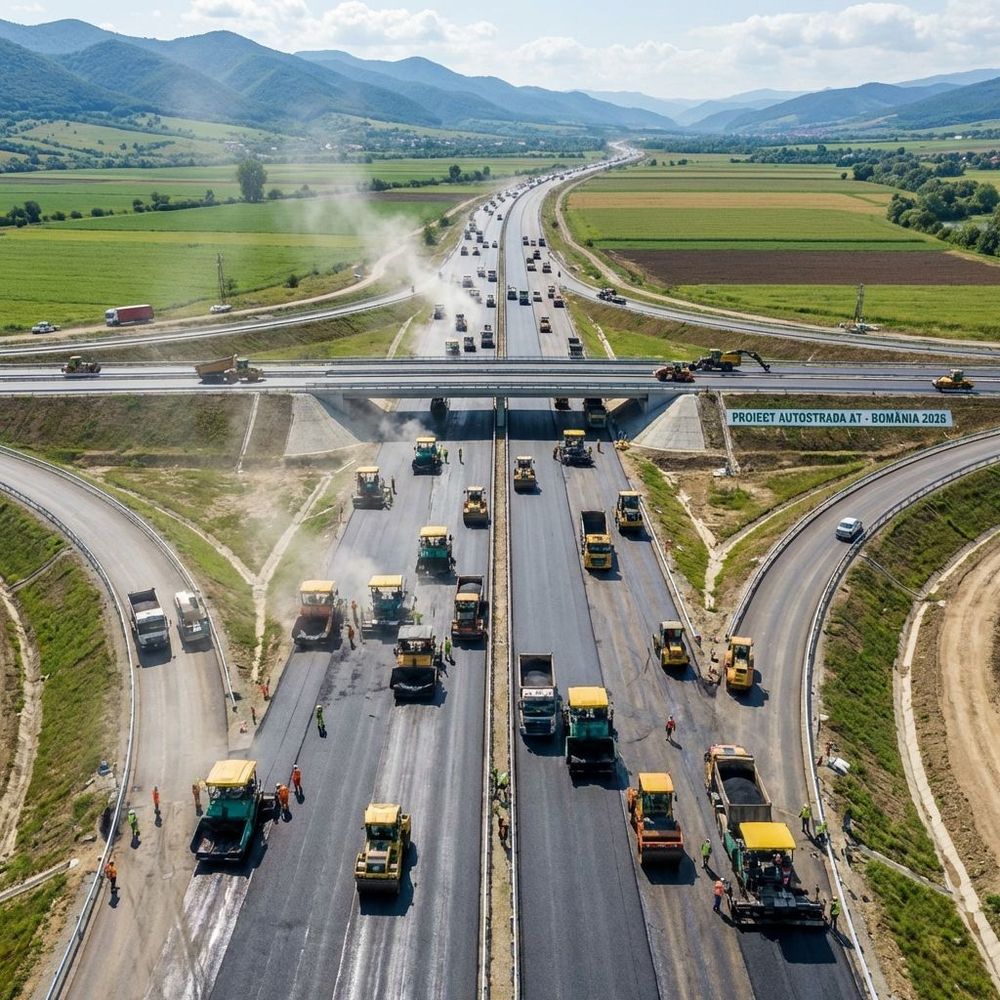
If you drive through the Moldavia region today, you can't miss it. The dust clouds are visiblefrom miles away. The A7 Motorway, connecting Ploiești to Siret, is arguably the most aggressive infrastructure project in modern Romanian history.
By 2026, this won't just be a construction site; it will be a functional economic artery. The government has earmarked approximately 25 billion lei for road projects in 2026 alone, with the A7 being the crown jewel. This highway is vital because it finally creates a high-speed link to the Ukrainian border, facilitating a massive flow of goods and reconstruction materials.
The Machinery Needs:
Asphalt demand: The sheer volume of paving required has completely booked out asphalt plant capacity in several counties.
Fleet mobilization: We are seeing "fleets on migration." Major contractors are pulling iron from Western Europe to meet the deadlines here.
Tech adoption: Creating a highway of this length in this timeframe requires 3D machine control. Graders and dozers without GPS systems are becoming obsolete on these job sites.
This is the "Golden Age" of Romanian road building. For anyone in the heavy machinery trade, the A7 represents a sustained, multi-year demand cycle that is peaking right now. The 2026 targets are ambitious, but with the amount of yellow iron currently moving dirt in Moldavia, they are looking achievable.